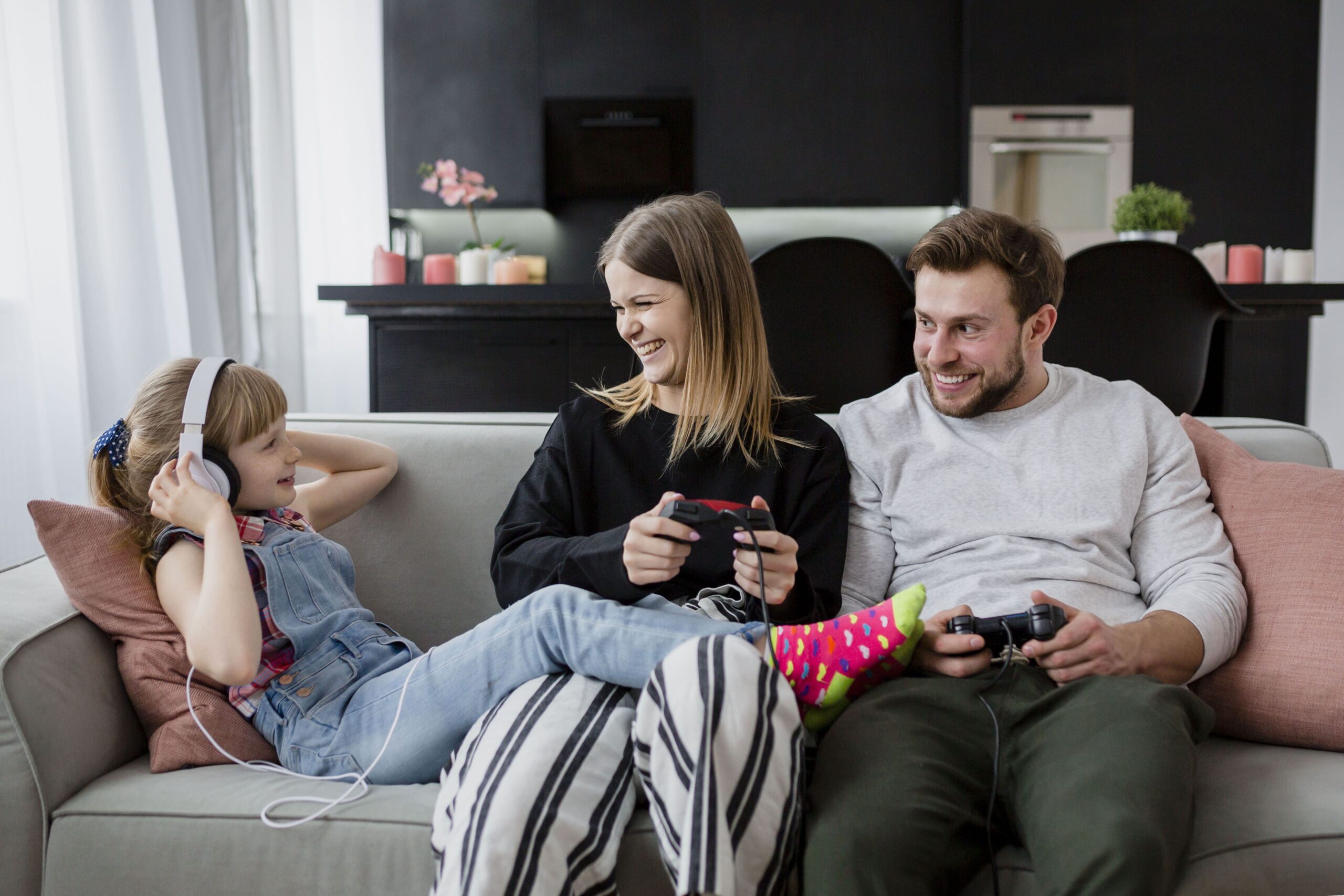
In 2025, video games are no longer just an optional pastime — they sit at the very heart of leisure for millions of children and teenagers. Trying to ban them outright is not only unrealistic, it often backfires. The real key lies in parents taking an active role: being present, understanding the medium and supervising with intention.
When gaming is managed with balance and clear boundaries, it can open the door to learning, creativity and safe fun — while reducing the risks we all worry about. Want to know how to get it right? This essential guide will help you become your child’s best ally in their digital world.
Psychological keys to healthy video game use
1. Accept technology as part of modern childhood
Why does it matter?
Today’s children are born into a digital world where screens and technology are part of everyday life. Trying to forbid video games or devices often creates frustration, resistance and tension at home — and can damage trust between parents and children.
Rather than turning technology into “the enemy”, children need to learn how to use it responsibly.
How to approach it
Acknowledge that technology is part of life and that you can learn how to manage it together. This builds respect, trust and open communication.
Helpful phrases you can use
- “I know you really enjoy video games, and that’s okay — I just want us to learn how to use them well together.”
- “Technology is like a tool: when we use it properly, it helps us; when we don’t, it can cause problems.”
- “It’s not about never using screens — it’s about using them in a way that doesn’t harm you or stop you doing other important things.”
2. Guided use based on your child’s maturity
Why does it matter?
Every child is different. Even children of the same age may not have the same emotional control or understanding of what they see in games. Some struggle to stop playing, while others may confuse fiction with real life.
How to approach it
Observe how your child reacts when they play. Do they get overly frustrated? Can they stop when asked? Do they understand what’s fictional? Use this insight to set rules that match their emotional and digital maturity.
Helpful phrases you can use
- “I’ve noticed it’s sometimes hard for you to stop playing when I ask — shall we make a schedule together?”
- “This game includes things that are only for play, not real life — would you like me to explain why?”
- “Let’s try playing for a short time today and then talk about how it made you feel.”
3. PEGI ratings: your built-in safety tool
Why does it matter?
PEGI ratings show the recommended age for each game and highlight content such as violence, fear or strong language. Respecting these ratings helps protect children’s emotional wellbeing.
How to approach it
Before buying or allowing a game, check its PEGI rating and talk to your child about what it means. Make it clear that age ratings aren’t punishments — they’re there to keep them safe.
Helpful phrases you can use
- “This game is rated PEGI 12 because it includes violence, so I’d rather you stick to games meant for your age.”
- “Look, this one is PEGI 7 — that means it’s suitable and safe for you.”
- “Let’s choose games together that match your age so you can enjoy them without worries.”
4. Parental controls: support, not a replacement
Why does it matter?
Parental controls can limit time and content, but they can’t replace conversation, guidance and emotional support. Children need to understand why limits exist.
How to approach it
Use parental controls, but stay involved. Ask about their favourite games, watch them play, and agree on rules together.
Helpful phrases you can use
- “I’ve set a time limit so you don’t play for too long — but if you like, we can play together for a bit.”
- “The controls help me make sure you don’t see unsuitable content, but I also want to hear what you enjoy about your games.”
- “If a game ever makes you feel uncomfortable, tell me and we’ll talk about it.”
5. Gaming time: healthy limits
Why does it matter?
Too much screen time can affect sleep, concentration, social skills and physical health. Child psychology recommends age-appropriate limits to avoid these issues.
How to approach it
Set clear schedules that match your child’s age and stick to them consistently. Timers and alarms can help avoid conflict.
Age-based guidelines and examples
- 0–6 years: no screens“Screens aren’t good for very young children because they affect development. Let’s play with toys or games in your room instead.”
- 7–12 years: limited use, ideally weekends“You can play for one hour at the weekend, so there’s time for homework, outdoor play and rest.”
“I’ll give you five minutes’ warning before it’s time to stop.”
- 13+ years: negotiated limits“You’re more independent now, so let’s agree on how many hours feel fair and help you stay organised.”
“If you notice you’re feeling tired or grumpy from playing too much, tell me and we’ll adjust it.”
What benefits can the right video game offer?
- Better decision-making and problem-solving skills
- Improved creativity and hand-eye coordination
- Stronger family bonds when playing together
- Development of strategic thinking and teamwork
The rise of video games as family leisure
Even before the pandemic, video games were already one of the most popular forms of home entertainment. In Spain, by 2018 nearly 17 million people were playing video games regularly. Children and teenagers remain the most active group, but many adults also play — making gaming a genuinely intergenerational activity.
This shared appeal turns video games into something families can enjoy together. Their accessibility and visual appeal make it easier for parents, children and even grandparents to connect and communicate through play.
Family-friendly games tend to:
- Require no previous gaming experience
- Be easy to learn
- Focus on cooperative, fun challenges
Ideas for video games to play as a family
- Mario Kart — fast, chaotic racing fun
- Minecraft — creativity, construction and learning
- Just Dance — music, movement and guaranteed laughs
- Wii Sports and Wii Sports Resort — gentle physical activity at home
- Super Mario Party — digital board-game style fun
- Overcooked — cooperative cooking chaos
- Keep Talking and Nobody Explodes — teamwork and communication
- Melbits World — puzzle-solving with adorable characters
- LEGO games — film adaptations like Harry Potter, Star Wars, Marvel
- Pandemic (digital version) — strategic cooperation against a global threat
Benefits of playing together
When chosen carefully and enjoyed as a family, video games can be a powerful educational tool:
- Strengthen emotional bonds between parents and children
- Encourage teamwork and problem-solving
- Develop cognitive skills such as memory, logic and planning
- Create safe spaces to discuss topics like violence, cooperation and respect
- Offer a positive alternative on rainy days or during long periods indoors
10 recommended video games for children in 2025
Ages 6–10
- Animal Crossing: New Horizons (Nintendo Switch)Encourages organisation, empathy and social interaction.
- Bluey: The VideogameReflects family values, cooperative play and emotional development.
- Cut the Rope (mobile app)Fun puzzles that build logical thinking.
- Archaeologist: Dinosaurs GameSparks curiosity and interest in science.
Ages 10–13
- Super Mario Bros Wonder / Odyssey / PartySafe games that promote cooperation, quick thinking and perseverance.
- Stop (StopotS)A classic word game with cognitive and social benefits, now digital.
- Trivia CrackGreat for general knowledge and collaborative learning.
Ages 13+
- Puyo Puyo Tetris 2Excellent for attention, planning and visual logic.
- Sackboy: A Big AdventureA platformer that boosts coordination, creativity and teamwork.
- Disney Classic Games CollectionNostalgia and intergenerational fun, ideal for family play.
Why violent video games should be avoided for children and teens
Children’s brains are still developing, particularly areas linked to empathy, emotional regulation and moral decision-making. Repeated exposure to violent content — even in fictional settings — can lead to emotional desensitisation, reducing sensitivity to others’ suffering.
This doesn’t mean children will become violent, but without adult guidance it may weaken their ability to empathise and process emotions appropriately. That’s why respecting PEGI age ratings and avoiding games that reward aggression or destruction is so important.
What about traditional play? Touching, feeling and building the real world
Video games should never replace traditional play, especially in childhood. Physical, sensory play is a biological necessity for brain development.
Traditional play supports:
- Gross and fine motor skills
- Sensory integration
- Emotional regulation
- Free creativity and imagination
- Body awareness and spatial understanding
- Real-world social interaction
Screens, no matter how educational, cannot activate all sensory systems the way climbing, building, drawing or running can.
Video games should be one part of a wider play ecosystem, never a replacement for:
- Outdoor free play
- Building with blocks or LEGO
- Arts and crafts
- Imaginative role-play
- Playing face-to-face with other children
Conclusion
In 2025, video games are an unavoidable part of children’s lives. Rather than banning or demonising them, the real challenge for parents is to guide, supervise and educate with awareness and respect.
Used in moderation, adapted to each child’s maturity and supported by tools like PEGI ratings and parental controls, video games can become a positive and enriching experience. They can build skills, strengthen family bonds and offer meaningful shared moments.
At the same time, traditional physical play remains essential for healthy development and must never be replaced.
The key is balance: integrating video games into a broader world of play where technology is used responsibly and children continue to explore the real world through movement, creativity and human connection.